| The Short Answer
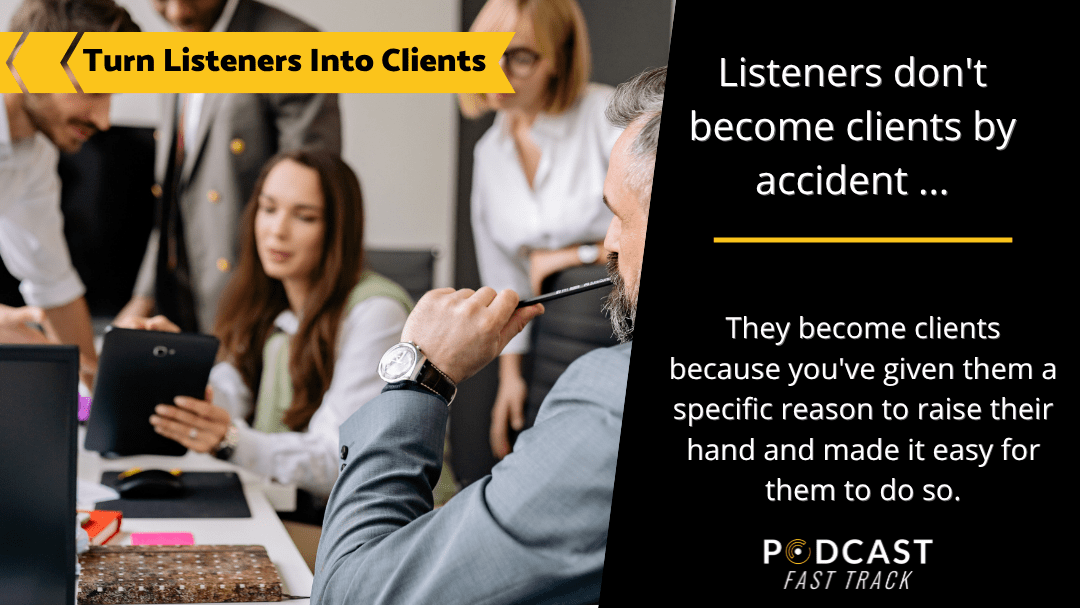
Turning podcast listeners into clients requires three things: a clear conversion path, consistent trust-building across every episode, and deliberate follow-up mechanics. Listeners don’t become clients by accident — they become clients because you’ve given them a specific reason to raise their hand, and made it easy for them to do so. |
There’s a frustrating gap that a lot of B2B founders fall into when it comes to their podcast. They’re publishing consistently. They’re getting decent listens. People tell them at conferences, ‘I love your show.’ And yet the leads aren’t coming.
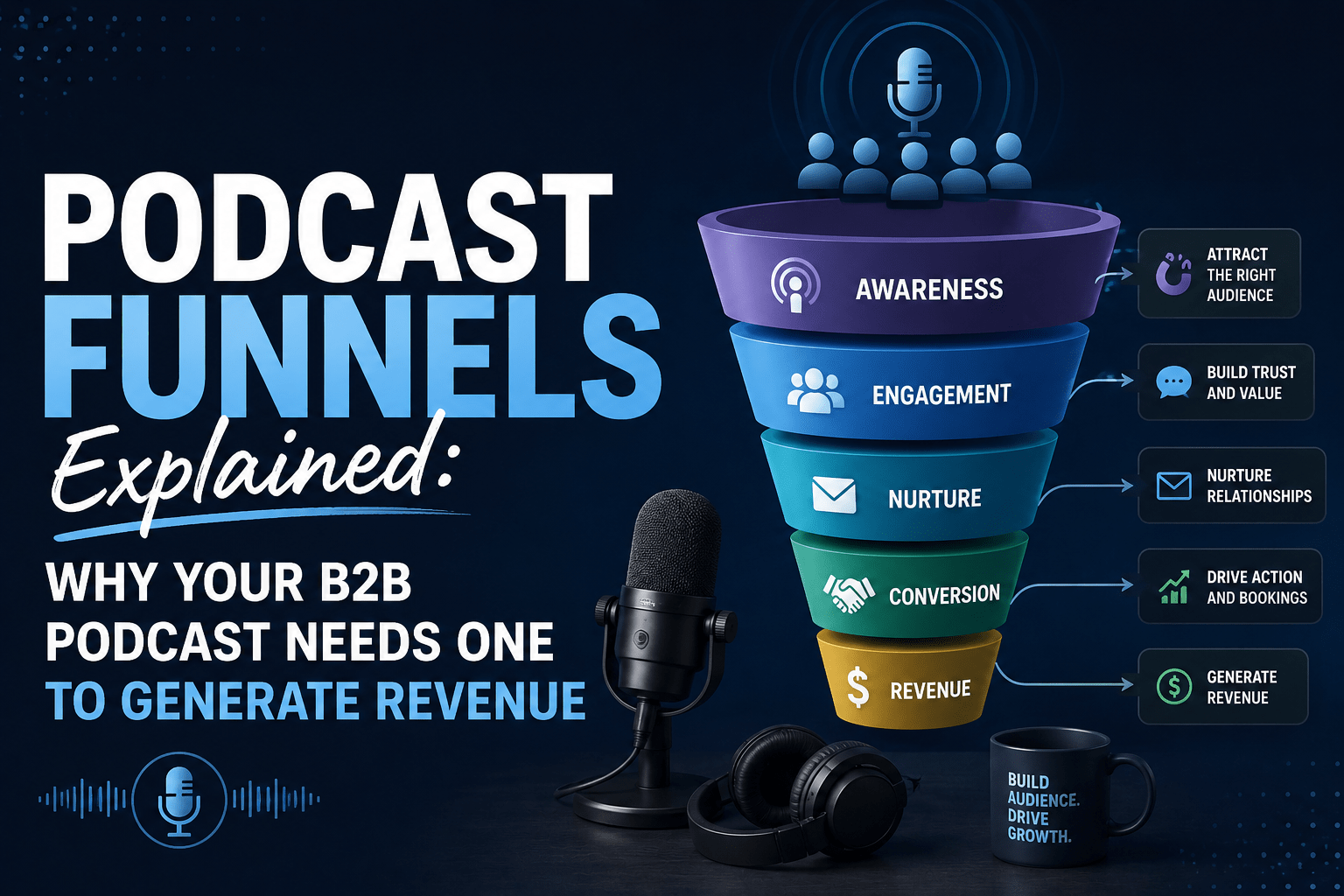
The problem isn’t the podcast. It’s that there’s no conversion architecture. Listeners are engaged, but there’s no bridge from ‘engaged listener’ to ‘booked call. This article gives you that bridge. Here’s exactly how to turn your podcast audience into a pipeline of qualified clients.
When Listeners Don’t Automatically Become Clients
Podcasting builds incredible trust, but trust alone doesn’t close deals. A listener can genuinely admire your expertise, tell their colleagues about your show, and still never reach out. Why?
- They don’t know what you sell or who it’s for
- There’s no clear next step being offered
- They assume you’re too busy, too expensive, or not relevant to them specifically
- There’s no urgency — they’ll ‘get around to it’
Your job as the host isn’t just to educate. It’s to create moments where the right listener thinks: ‘This is exactly for me, and I need to reach out now.’
The 4-Step Framework for Converting Listeners Into Clients
Step 1: Be Explicit About Who You Help and What You Do
Most podcast hosts are too subtle. They assume listeners know what their company does. They don’t — at least not clearly enough to act on it.
In every episode (yes, every single one), you need a moment where you clearly state who you work with and what outcome you deliver. Not a sales pitch. Just clarity.
| Example intro:
“Before we dive in — if you’re a B2B founder trying to turn your podcast into an actual lead generation channel, that’s exactly what we help with at Podcast FastTrack. We build and manage podcasts that generate pipeline, not just downloads. If that’s you, there’s a link in the show notes to book a call.” |
That’s 30 seconds. It’s not pushy. And it means every listener knows exactly what to do if they want more.
Step 2: Give Listeners a Specific Reason to Raise Their Hand
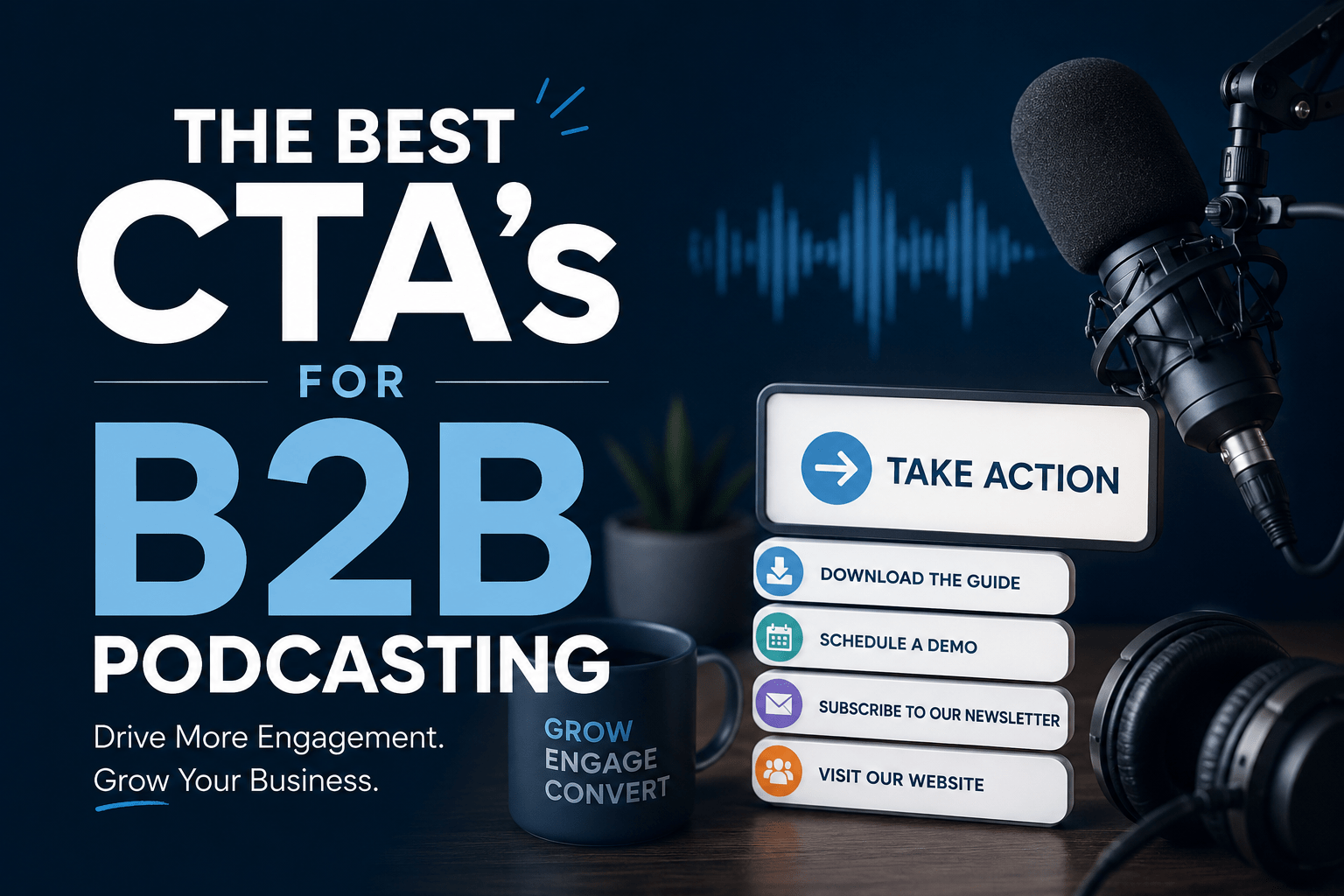
A generic ‘visit our website’ CTA converts poorly. Listeners need a specific, low-friction offer that meets them where they are. The best-performing CTAs for B2B podcast conversion are:
- A free strategy call — works when your service is high-value, and decision-makers are listening
- A lead magnet tied to the episode topic — e.g., ‘Download the podcast launch checklist we mentioned’
- A diagnostic or assessment — e.g., ‘Take our 5-minute podcast ROI audit’
- A private community or LinkedIn group — lower friction, builds an ongoing relationship
The key is relevance. The offer should feel like a natural next step from what the listener just heard, not a hard pivot into sales mode.
Step 3: Use Your Guest Strategy as a Sales Tool
If you’re interviewing guests, you’re sitting on one of the most powerful — and most underused — conversion mechanisms in B2B podcasting.
The process is simple:
- Invite your ideal clients (or strong referral sources) as guests
- Deliver a genuinely valuable interview experience
- Follow up within 48 hours with a personal note and the episode link
- Stay in touch — comment on their content, share the episode, check in
- When the timing is right, transition the conversation to your services
This isn’t manipulation. It’s relationship building with intention. The podcast gives you a legitimate reason to start a conversation with anyone. Very few outreach channels offer that.
Founders using this approach consistently report that 20–30% of podcast guests become clients or referral sources within 12 months.
Step 4: Build a Follow-Up Sequence for New Subscribers
When someone subscribes to your podcast, follows you on LinkedIn, or downloads a resource — they’re raising their hand. Most founders do nothing with that signal.
Set up a simple follow-up sequence:
- Email 1 (immediate): Welcome, deliver on the promise, introduce yourself personally
- Email 2 (day 3): Share your best episode relevant to their likely problem
- Email 3 (day 7): Case study or proof point — show what you’ve done for others
- Email 4 (day 14): Soft CTA — invite them to book a call or reply with their biggest challenge
Four emails over two weeks. Simple, personal, and it works because the person already likes you — they subscribed to your show.
What Good Conversion Looks Like: Metrics to Track
Forget downloads as your north star. If your goal is clients, track these instead:
| Metric | Why It Matters |
| CTA click-through rate | Are listeners taking the action you’re asking for? |
| Lead magnet opt-ins per episode | Which topics attract the most conversion intent? |
| Guest-to-conversation rate | What % of guests are entering your pipeline? |
| Inbound mentions / DMs | Are listeners reaching out organically? |
| Revenue attributed to the podcast | The ultimate metric — track it in your CRM from day one |
The One Thing Most Founders Skip
After 100+ conversations with B2B founders about their podcasts, there’s one conversion lever that almost nobody uses consistently: personal outreach. When a new listener engages with your content — comments on a clip, shares an episode, replies to your newsletter — reach out personally with genuine acknowledgment.
| Example LinkedIn message:
“Hey [Name] — noticed you shared our episode on podcast funnels. Really appreciate it. Curious what your current setup looks like — are you running a podcast already or exploring it? Happy to share what’s working for founders in your space.” |
That message starts a conversation. Conversations start relationships. Relationships generate clients. The podcast gave you the reason to send it — most founders just never pull the trigger.
| Want a Conversion System Built Into Your Podcast From Day One?
At Podcast FastTrack, we don’t just produce podcasts — we build them as revenue engines. That means guest strategy, CTA architecture, follow-up sequences, and a clear path from listener to client. 👉 Book a free strategy call at podcastfasttrack.com |
Related Reading
If you found it useful, these go deeper: