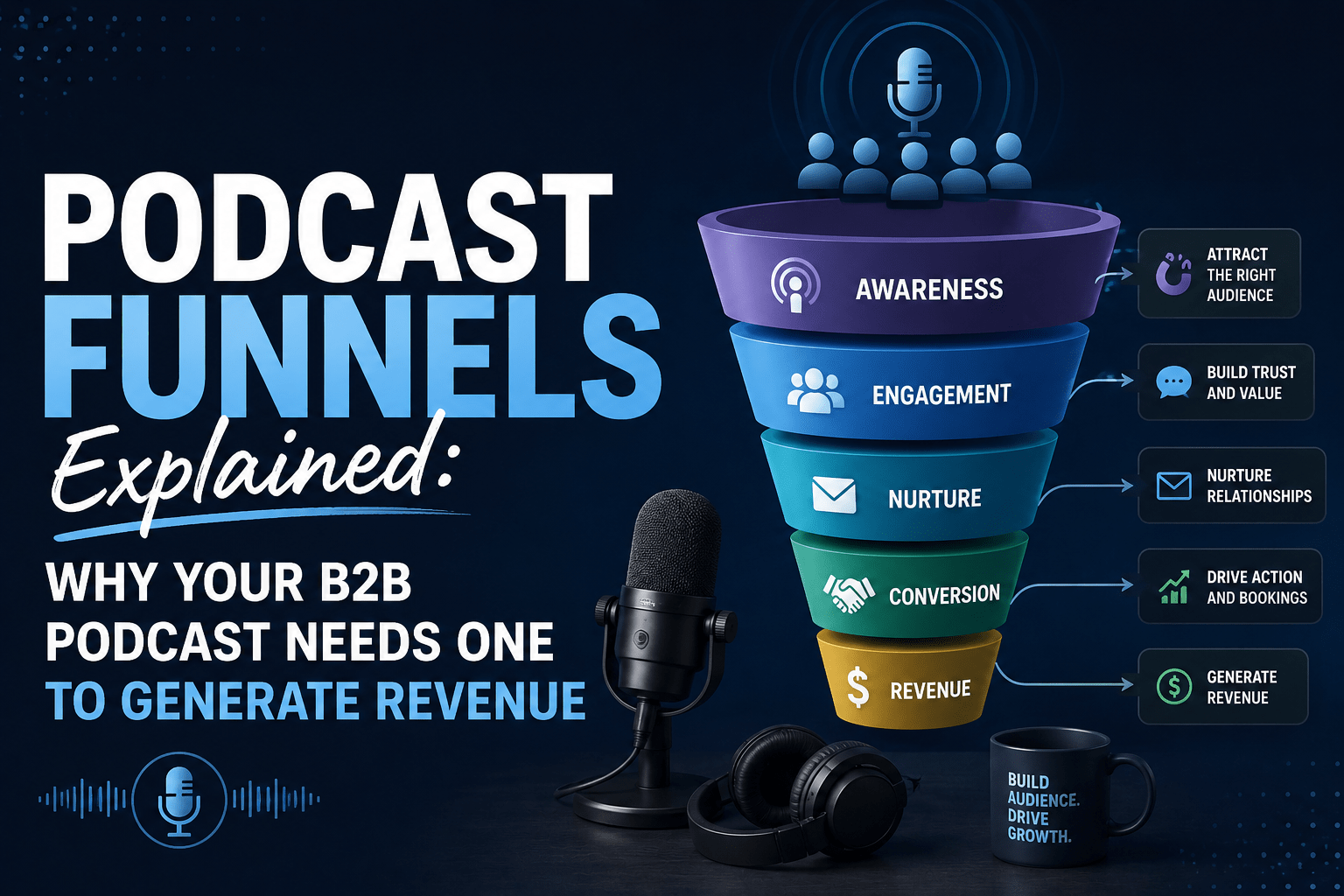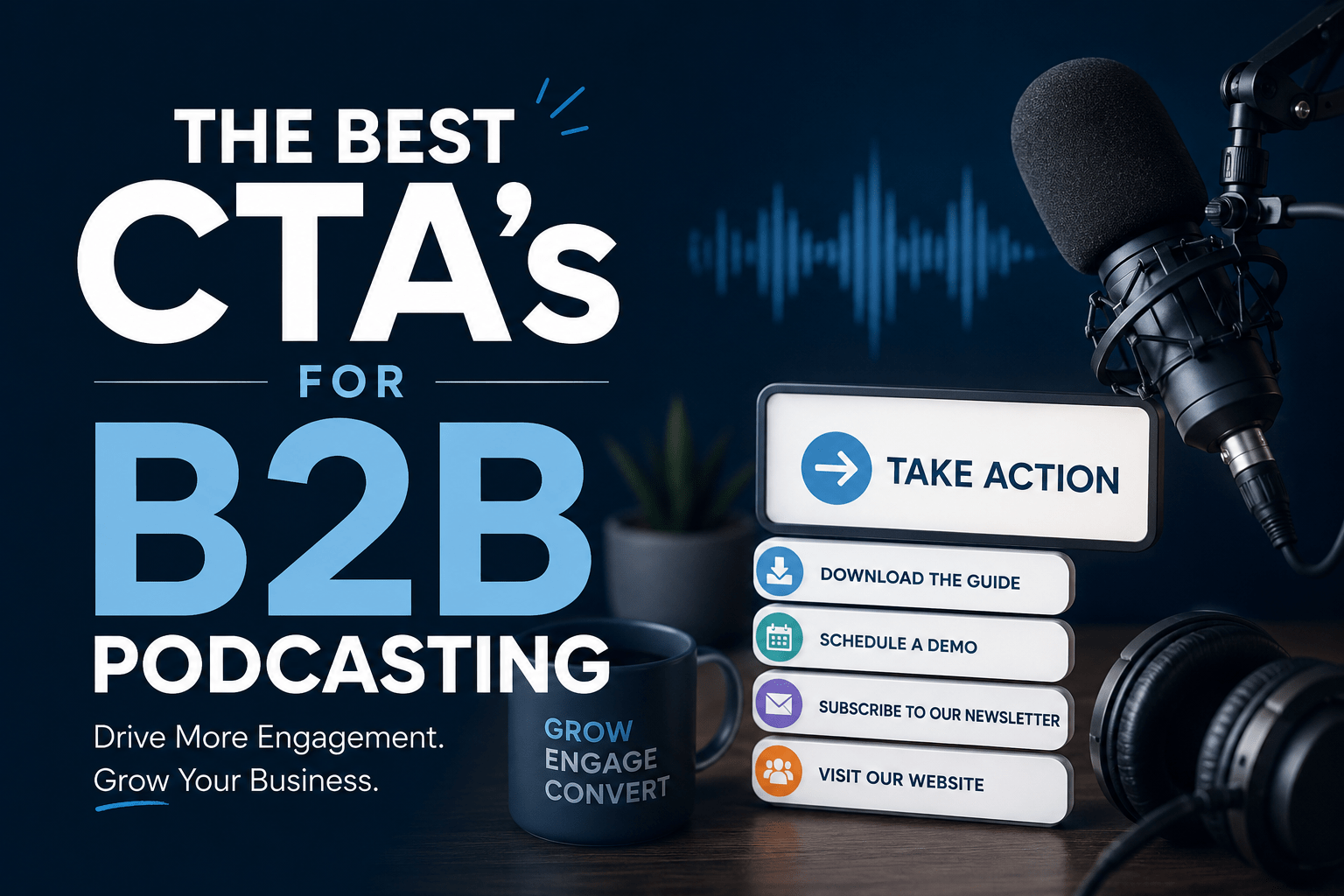
The best CTAs for B2B podcasts are low-friction, high-relevance offers that match where your listener is in their buying journey. Rather than pushing for an immediate sale, they invite a next step: a strategy call, a useful resource, a community, or a live event. When placed at the right moment in an episode and repeated consistently across channels, podcast CTAs become one of the most reliable lead generation tools available to B2B founders.
Why Most B2B Podcast CTAs Don’t Work
Most podcast hosts either skip the CTA entirely or default to something vague like “follow us on social media” or “leave a review.” Neither drives revenue. The problem isn’t that podcasts can’t convert — it’s that the CTA isn’t connected to anything the listener actually wants in that moment. B2B buyers are busy. They’re not going to dig around your website to figure out how to work with you. Your CTA needs to tell them exactly what to do, why it’s worth their time, and how to do it in one sentence. If it takes longer than that, you’ve already lost them.
The other mistake is treating every episode the same. A listener who just discovered your show needs a different prompt than someone who’s been following you for three months. The best B2B podcast CTA strategies account for audience temperature and offer something that meets listeners where they are.
The Six Best CTAs for B2B Podcasts
1. Book a Strategy Call
This is the highest-converting CTA for service-based B2B businesses when it’s positioned correctly. The keyword is “strategy” — not sales call, not demo, not discovery call. Strategy implies you’ll bring expertise, not a pitch. If your podcast is building genuine authority with your audience, a strategy call CTA will convert because listeners already trust your thinking before they get on the phone. Use this CTA towards the end of episodes where you’ve covered a meaty topic your ideal client is wrestling with. The framing matters: “If you’re trying to figure out whether a podcast makes sense for your business, we do free 30-minute strategy calls — link is in the show notes” lands better than “book a call with us today.”
2. Download a Free Resource
Lead magnets work especially well for listeners who aren’t ready to talk yet but are actively researching. A checklist, calculator, guide, or template gives them something tangible in exchange for their email address, and moves them into a nurture sequence where you can keep building the relationship. The resource needs to be tightly connected to the episode topic to get a strong click-through. A generic “download our free guide” won’t cut it. Something like “we put together a podcast ROI calculator you can use to build an internal business case — grab it at the link below” gives the listener a clear reason to act now.
3. Join a Newsletter or Community
For founders building long-term authority, a newsletter or private community CTA is an underrated tool. It’s a low-commitment ask that converts well with new listeners, and it keeps your brand in front of potential clients on a weekly basis. Over time, newsletter subscribers who were never ready to buy become buyers — because you stayed in the conversation. This CTA works best in the introduction or early in the episode when you’re building rapport with first-time listeners. Keep the pitch simple and benefit-led: what will they get from subscribing, and how often?
4. Attend a Live Event or Webinar
If you run live events, workshops, or webinars, your podcast is one of the best places to fill seats. Listeners already trust your expertise — you just need to give them a reason to show up in real time. Live events create a natural conversion moment that’s much harder to engineer through cold outreach or paid ads. This CTA is time-sensitive by nature, which gives you a built-in urgency angle without having to manufacture one. Use it in episodes recorded close to the event date for maximum relevance.
5. Read a Related Article or Case Study
Not every CTA needs to be a direct lead generation play. Sending listeners to a high-quality case study or blog post deepens their understanding of your work, keeps them in your ecosystem, and moves them naturally down the funnel. This CTA works particularly well when the episode references a result you’ve achieved for a client — “we actually wrote this up as a full case study, link is in the show notes” is a natural, unsalesy follow-through. It also builds your website’s organic traffic, which compounds over time — every listener who clicks through is a potential conversion from your content library.
6. Refer a Colleague
This one is underused. B2B audiences are full of people who know other people who need your services. A simple “if you know someone building a B2B podcast, send them this episode” costs nothing and can generate warm introductions that convert faster than any cold outreach. Use it at the end of episodes that solve a very specific, shareable problem.
Where to Place CTAs in Your Podcast
Placement matters as much as the offer itself. Most listeners never make it to the end of an episode, so relying solely on an outro CTA means a significant portion of your audience never hears it. A mid-roll CTA, dropped naturally into the conversation at a moment of high engagement, will typically outperform an outro CTA. The best mid-roll placements happen right after a key insight lands — when the listener is nodding along and receptive. Keep it brief, no more than 20 seconds, and make it feel like part of the conversation rather than an ad break.
Beyond the episode itself, your show notes are prime CTA real estate that most hosts underestimate. A well-written show notes page with a clear, linked CTA captures listeners who are browsing on desktop or who want to act after the episode ends. The same goes for the episode description in your podcast app, that’s the first thing a potential new listener reads before deciding whether to press play.
When you repurpose episode clips for LinkedIn or other channels, carry the CTA through into the caption. The clip gets them curious; the caption tells them what to do next. Without it, you’re leaving conversions on the table at every stage of distribution.
Who This Is For
This approach to podcast CTAs works best for B2B service firms and SaaS companies where the sales process involves a conversation before purchase. If you’re selling high-ticket services, professional expertise, or complex solutions to business buyers, a well-placed podcast CTA can do the work of an entire outbound sequence, with warmer prospects on the other end. It’s particularly effective for founders and CEOs who are the face of the brand. When listeners hear your thinking over 10 or 20 episodes, the CTA becomes almost redundant—they already want to work with you. The CTA just tells them how.
Ready to Turn Your Podcast Into a Lead Generation Engine?
At Podcast FastTrack, we help B2B founders build podcasts that generate real pipeline, not just downloads. If you want to see what a podcast strategy built around your business goals looks like, book a free strategy call. We’ll map out exactly how your show can start converting listeners into clients.